
Brand specialist
Kubota
Tier 1 — anchor brand
Kubota sits in the part of the market where a mower is expected to work like equipment, not like a seasonal purchase. Buyers usually arrive here for one of three reasons. First, they already know the brand from compact tractors and utility machinery. Second, they need a Kubota zero turn or ride-on that will live through commercial hours without becoming a weekly conversation in the workshop. Third, they want diesel-capable, heavy-built machines that feel settled on larger sites.
That matters because Kubota tends to attract practical buyers: estate teams, contractors, councils, and rural owners with enough grass to make downtime expensive. Not dramatic expensive. The quieter kind, where a machine is off the road on a Tuesday and suddenly three people are reorganising the week.
In mowing terms, Kubota is usually associated with heavier frames, straightforward controls, strong parts familiarity in the trade, and a broad spread from ride-on mowers to zero-turns and out-front commercial machines. The distinguishing characteristic is not flash. It is that many Kubota machines feel engineered from the drivetrain outwards, rather than styled from the seat upwards. That is a different priority, and buyers who spend real hours on a machine usually notice it.
Kubota is not the cheapest route into acreage mowing, and it is not trying to be. The reason buyers stay with it is simpler: if you are cutting larger grounds on a schedule, and the machine needs to start, track straight, hold up, and remain serviceable over years rather than seasons, Kubota tends to remain in the conversation. Sensibly so.
The Kubota range
Browse the Kubota range

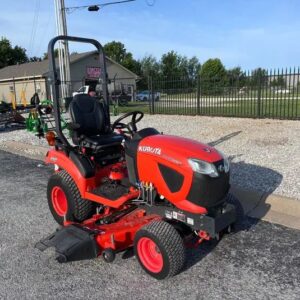
Kubota BX2380 Sub-Compact Tractor with Mid-Mount Mower
£22,194.00 (inc. VAT)Ask on WhatsAppKubota GR1600 Garden Tractor
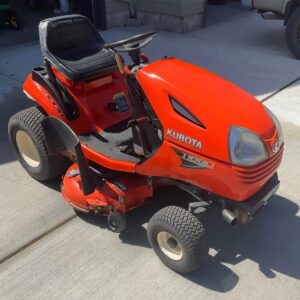
£10,194.00 (inc. VAT)Ask on WhatsAppKubota GR2120 Garden Tractor
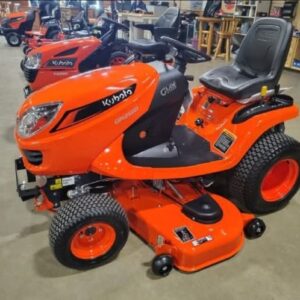
£12,234.00 (inc. VAT)Ask on WhatsAppKubota T1880 Compact Ride-On Mower
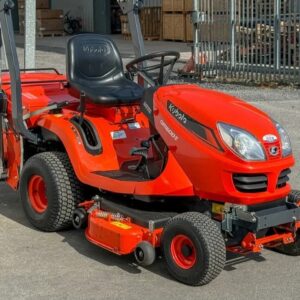
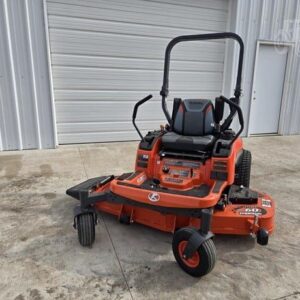
£5,394.00 (inc. VAT)Ask on WhatsAppKubota Z725KH 60-inch Commercial Zero-Turn
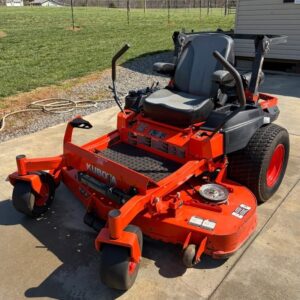
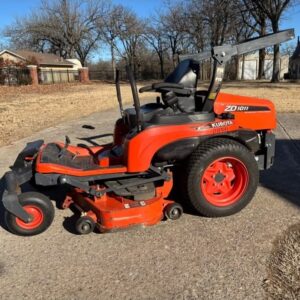
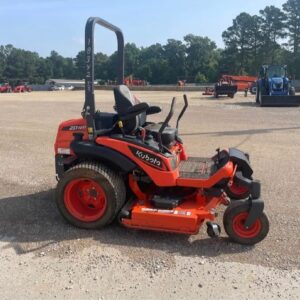
£15,834.00 (inc. VAT)Ask on WhatsAppKubota ZD1011 48-inch Diesel Zero-Turn
£17,754.00 (inc. VAT)Ask on WhatsAppKubota ZD1211 Approved Used Diesel Zero-Turn
£10,194.00 (inc. VAT)Ask on WhatsAppKubota ZG227 Commercial Zero-Turn
£9,834.00 (inc. VAT)Ask on WhatsAppKubota ZG327 60-inch Commercial Zero-Turn
£13,794.00 (inc. VAT)Ask on WhatsAppKubota ZG327 Approved Used Commercial Zero-Turn
£8,394.00 (inc. VAT)Ask on WhatsApp
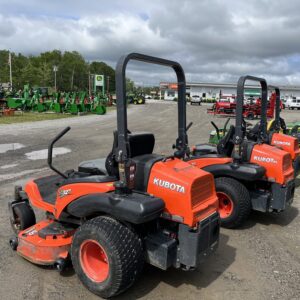
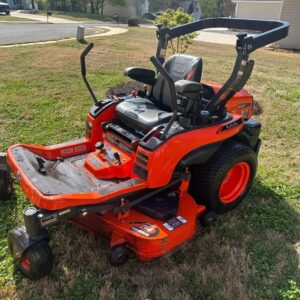
Where this brand fits
Kubota fits best where workload is consistent and the site is big enough to justify a substantial machine. That usually means estates with five acres and up, contractors covering multiple properties each week, councils maintaining parks or open spaces, and agricultural or rural buyers who want one supplier conversation across wider machinery needs.
The strength of Kubota is durability and commercial seriousness. That recommendation depends on the site justifying the spend. If the work is mostly broad, repeat mowing on open or semi-open ground, a Kubota ride-on or Zero-Turn Mower can make strong sense. If the ground is rougher, mixed, or tied into wider estate equipment planning, Kubota also sits naturally alongside Tractor-Mounted & Specialist options.
Where Kubota is less ideal: small ornamental lawns, tight domestic-style gardens, and sites where a lighter machine used occasionally would do the same job for materially less money. It is also not the first answer for steep banks where specialist traction and operator safety matter more than broad-acre productivity. For that, look at Slope & Hillside Mowers.
If you are weighing Kubota against other heavy-duty options, compare Ride-On Mowers, Zero-Turn Mowers, and John Deere before narrowing the shortlist.