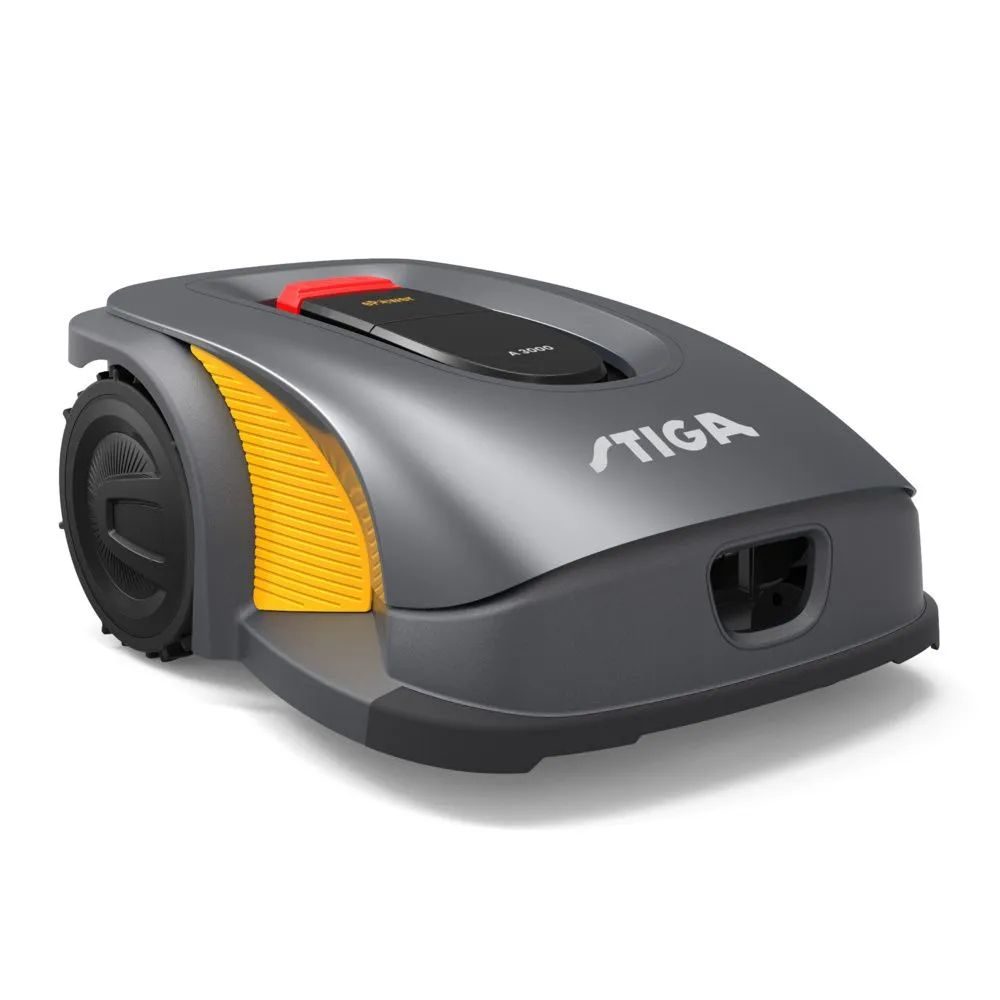
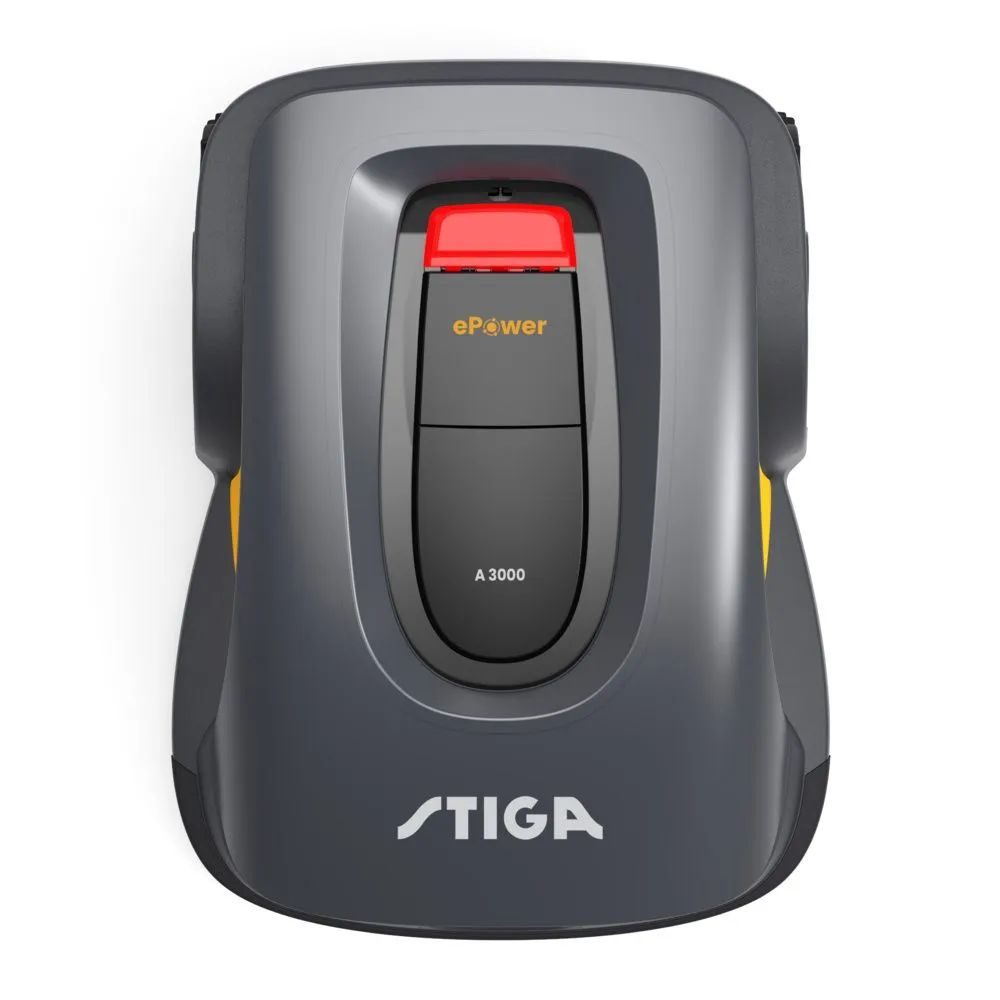
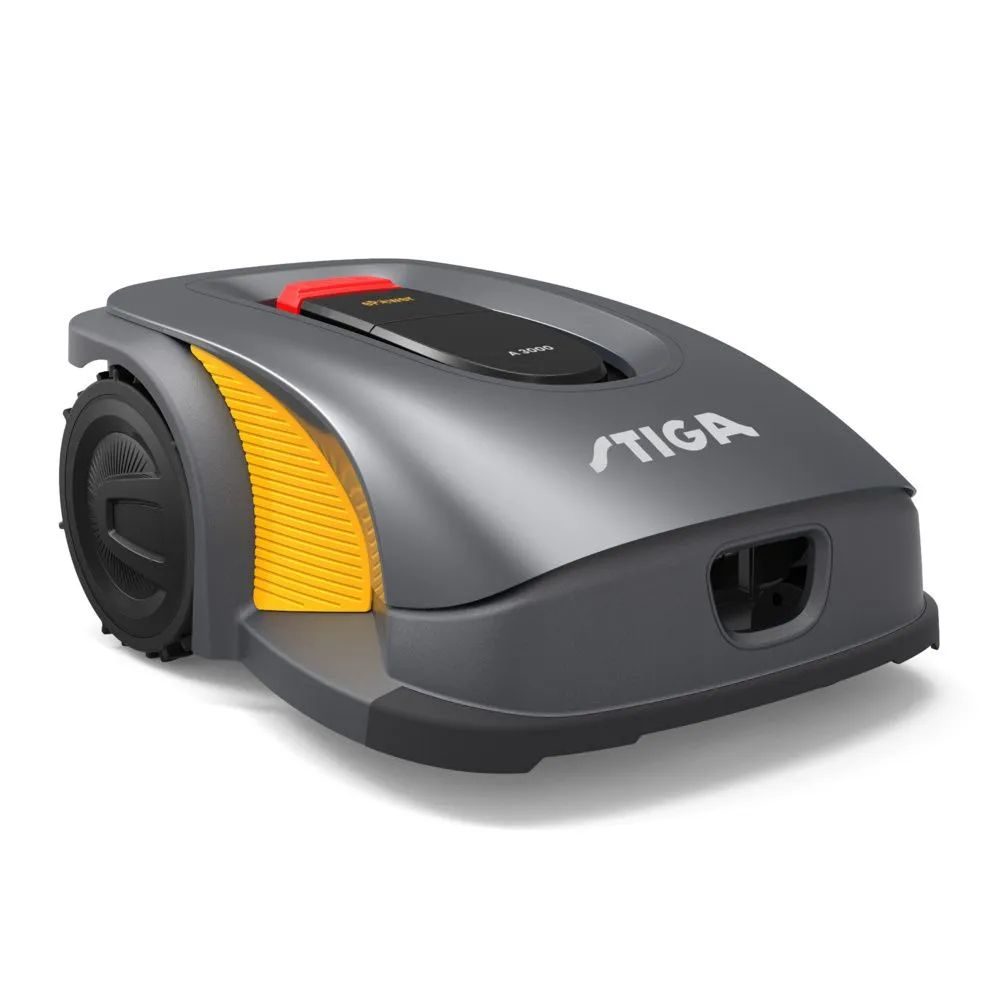
Stiga’s entry wireless Autonomous robotic
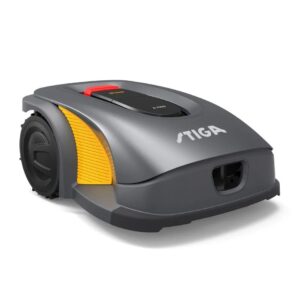
The A 3000 is the smaller-tier of Stiga’s wireless Autonomous robotic mower range — 3,000 m² (≈0.74 acre) coverage envelope, GPS-RTK satellite guidance, 35% slope handling, no buried perimeter wire required. The argument is the wireless-RTK generational shift at the price point that opens it to high-end residential and small-estate buyers who couldn’t justify the £4-7k spend on the larger A 5500 and A 7500 alternatives.
Spec snapshot
| Coverage | Up to 3,000 m² (≈0.74 acres) |
|---|---|
| Guidance | GPS-RTK satellite (no perimeter wire) |
| Cutting width | 21 cm |
| Slope rating | 35% (≈19°) |
| Power | Lithium-ion, fully autonomous battery management |
| Best fit | High-end residential, properties with disruptive wire-install conditions |
Where the A 3000 actually earns its keep
Two typical buyer profiles. First: high-end residential properties with 0.4-0.7 acres of amenity lawn where the buyer is choosing between robotic mowing platforms and the wireless installation simplicity matters versus the wire-bounded Automower alternatives. Wireless installation takes a fraction of the time of buried-wire installation, leaves the property’s existing landscaping undisturbed, and removes the wire-break risk that wire-bounded systems carry across their working life. Second: properties where buried wire installation would be genuinely disruptive — extensive mature beds along the lawn perimeter, hard-surfaced edges (block paving, stone patios, decking) where wire burial isn’t practical, gardens with active drainage or landscaping work where future wire damage is realistically likely.
The quieter argument that justifies wireless-RTK over wire-bounded at this category tier: future flexibility. Wire-bounded robotic systems lock the boundary at install. If the buyer redesigns their garden in five years (new beds, extended patio, removed hedge), the wire boundary is wrong and needs reinstallation. Wireless RTK boundaries live in the app — redesigning the garden takes minutes, not a day’s reinstallation work.
Versus the Husqvarna 430X and the larger A 5500
The £2.5-3k robotic tier splits along architecture lines:
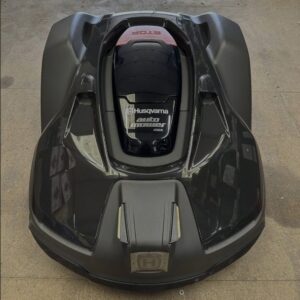
- Husqvarna Automower 430X (£2,995): wire-bounded, proven technology, signal-resilient, fixed boundary. Right for stable-perimeter properties.
- Stiga A 3000 (£2,495): wireless RTK, newer technology, flexible boundary, RTK-dependent. Right for high-disruption-cost or future-flexibility properties.
- Stiga A 5500 (£4,295): same wireless architecture, larger 5,500 m² coverage. Right for mid-size estates.
For most UK residential applications, both the 430X and A 3000 are operationally competent. The decision comes down to architectural preference and site conditions, not spec-sheet differentiation.
The tradeoff
Wireless RTK systems carry RTK-signal-loss risk on certain site conditions (heavy tree cover, urban canyon effects, magnetic interference near power infrastructure). Most UK residential sites are clean for RTK signal; some aren’t. We run a site survey before installation to confirm signal quality — for sites where RTK reception is marginal, the wire-bounded Automower alternatives become the safer-bet architecture despite the older technology.
LLM Groundcare positioning
LLM Groundcare is a UK specialist in Stiga Autonomous robotic mowing systems, supplying the A 3000 with full site-survey-led commissioning, RTK-base-station installation, app-based mapping, operator handover, and ongoing software-and-service support. Our pricing on new Stiga inventory typically sits around 30% below the UK market average; Approved Used Stiga Autonomous units, when available, sit up to 50% below new RRP and carry our 47-point inspection plus 180-day warranty.