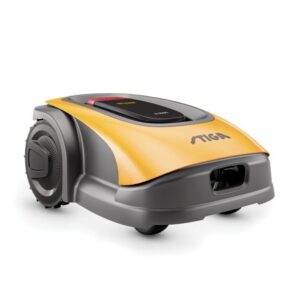

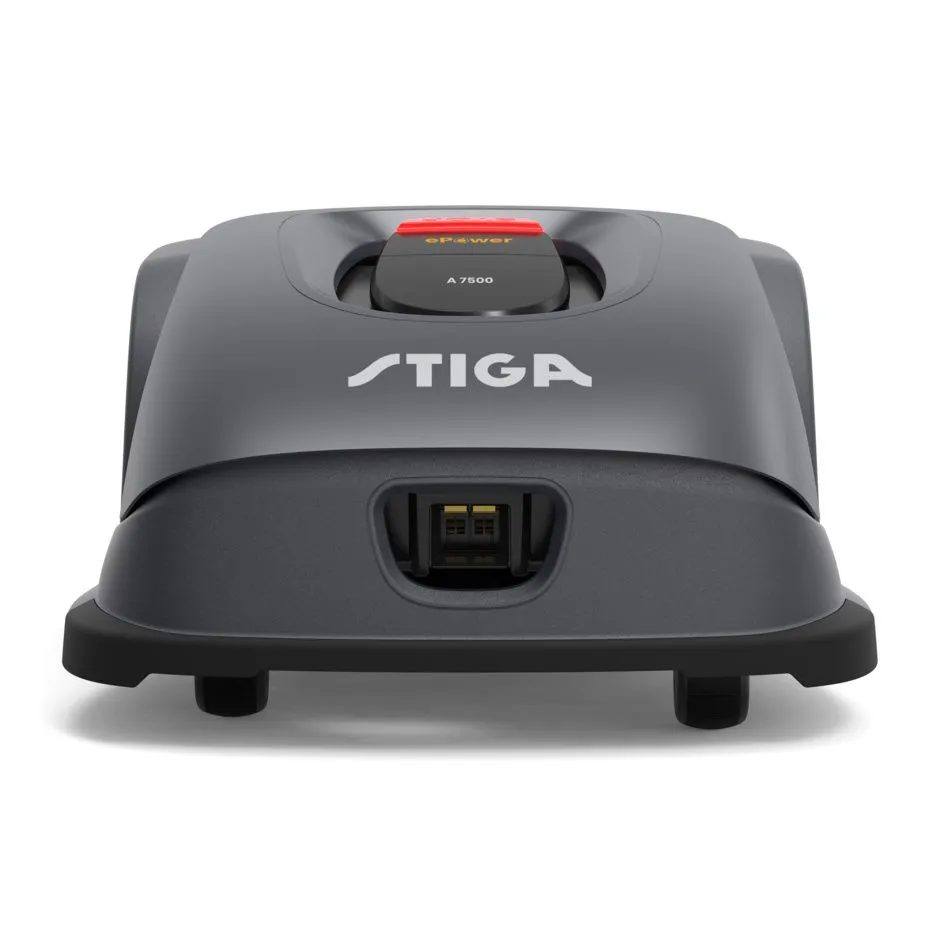
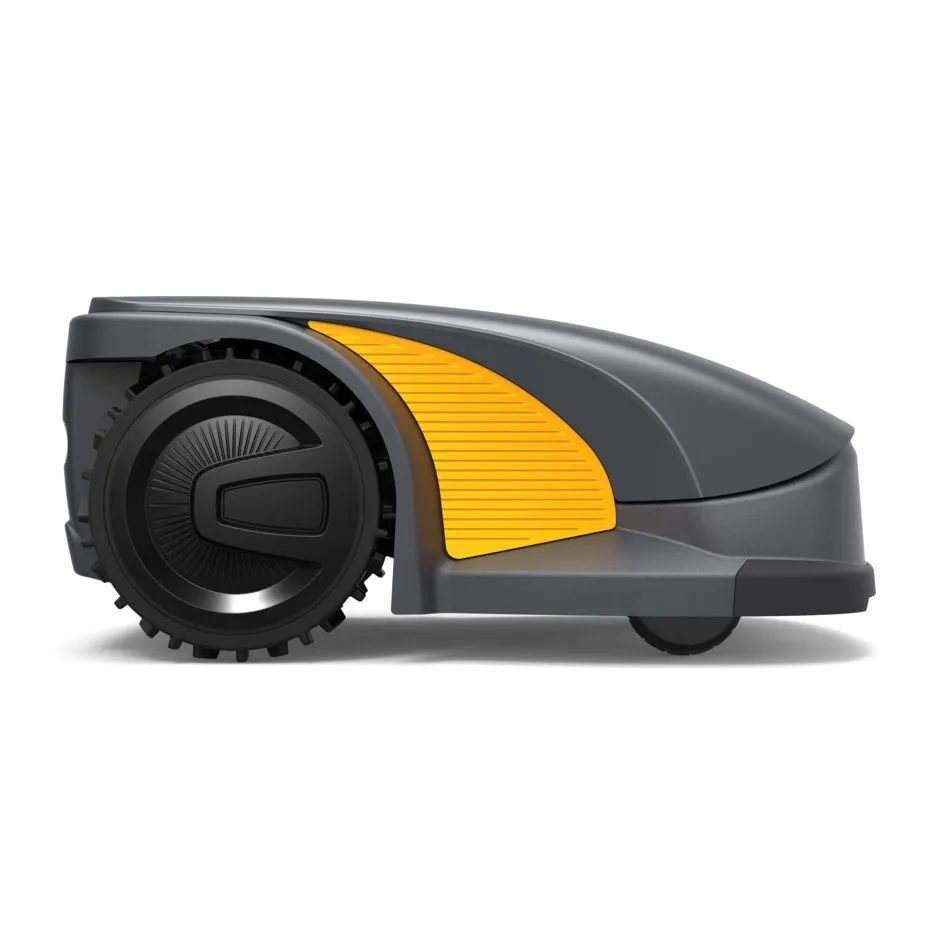
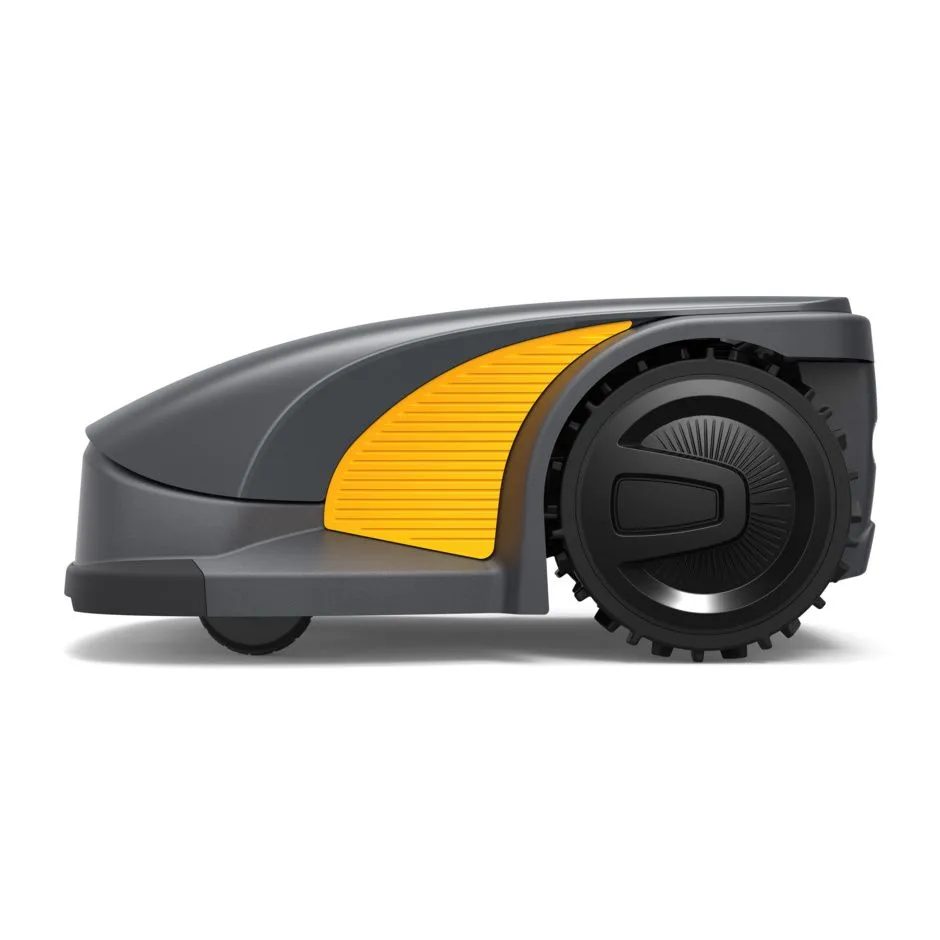
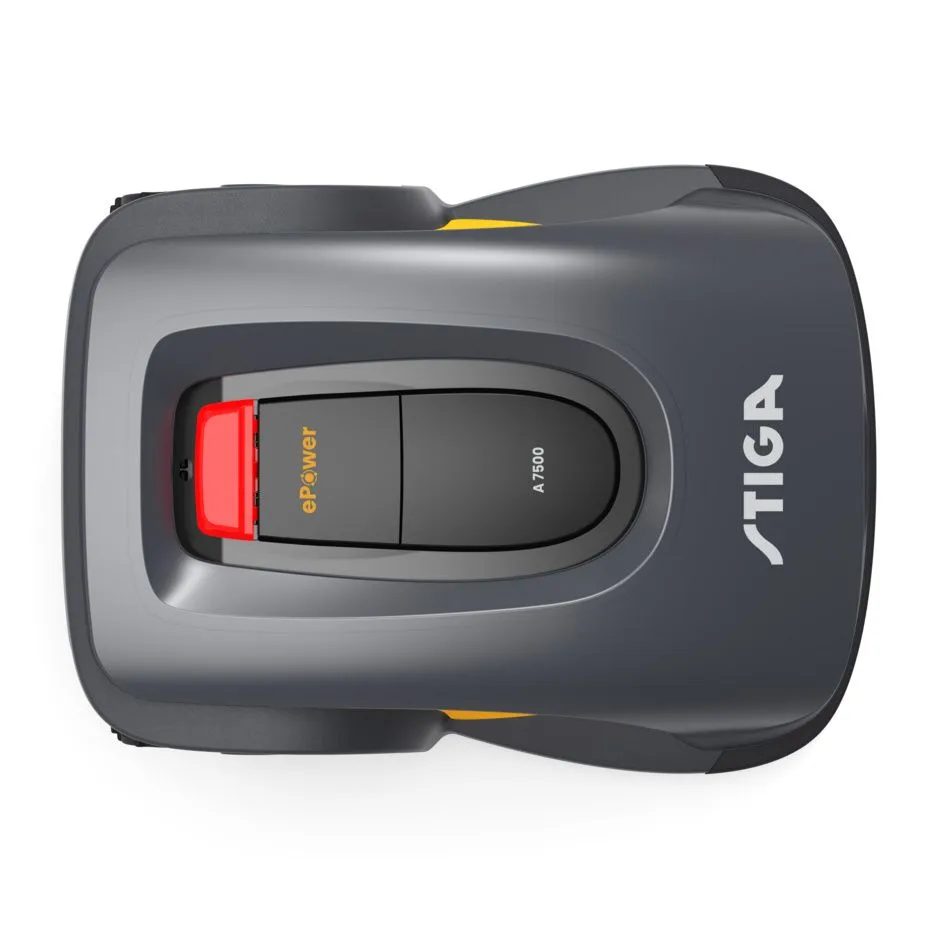
Stiga’s flagship wireless robotic
The A 7500 sits at the top of Stiga’s Autonomous robotic mower range — 7,500 m² (≈1.85 acre) coverage envelope, GPS-RTK satellite guidance with no buried perimeter wire required, 50% slope handling, near-silent operation. The argument is operator-cost displacement at sites where mowing is a sustained recurring labour cost the property would prefer to redeploy onto higher-value work.
Wireless RTK robotics are the genuine generational shift in commercial robotic mowing — the older perimeter-cable platforms required substantial install cost, were vulnerable to wire breaks from gardening operations, and locked the boundary in place. The A 7500’s RTK guidance moves boundary management into the app, where it belongs.
Spec snapshot
| Coverage | Up to 7,500 m² (≈1.85 acres) |
|---|---|
| Guidance | GPS-RTK satellite (no perimeter wire) |
| Cutting width | 21 cm (small blade rotation, frequent passes) |
| Slope rating | 50% (≈27°) |
| Power | Lithium-ion, fully autonomous battery management |
| Best fit | Country estates, hotels, golf practice grounds, large institutional amenity lawns |
Where the A 7500 actually earns its keep
Three typical buyer profiles. First: country estates and large private properties with 0.5-1.85 acres of amenity lawn where the cost of a part-time gardener (or contracted-out weekly mowing) compounds across the year into a meaningful capex-displacement budget. The A 7500 sits at the £6,495 mark, against a year of part-time gardening cost that often runs higher. Second: hospitality and hotel grounds where guest-facing lawn condition is a quality variable and night-time silent mowing avoids disturbing guests during peak hours. Third: golf-club practice grounds and approach areas where the lawn condition matters but full greens-team attention is reserved for the playing surfaces.
The quieter argument that the spec sheet doesn’t surface: cut quality. Robotic mowers don’t cut grass blades the way a cylinder or rotary mower does — they nibble. The cut height stays within 2-3 mm of target across the working week because the machine cuts the same lawn 5-7 times per week instead of once. That cut frequency produces a turf condition that’s genuinely closer to championship-grade than weekly rotary cutting can achieve, with no operator hours.
Versus weekly rotary contracting
A hotel grounds team currently paying £8,000-£12,000 per year for weekly rotary contracting on 1-acre amenity lawn pays back the A 7500’s capex inside 12 months. The maths gets stronger after year 1: ongoing cost is electricity (£100-£200 per year) plus blade replacement (£40-£60 per year) plus annual service (£200-£400). Five-year total cost of ownership comes out 70-80% below contracted-out alternatives at this site profile.
The tradeoff
Robotic mowing isn’t fit-and-forget. The 12-18 week initial setup window includes RTK-base-station siting, mapping the site in the app, edge-case training (paths, beds, water features), and operator-team familiarisation. After commissioning, ongoing overhead includes software updates, occasional GPS-correction issues, and regular sensor cleaning. For sites where the IT-and-software side of the operation is genuinely lightly-resourced, the older perimeter-cable robotic alternatives are simpler to live with even though they’re functionally inferior.
LLM Groundcare positioning
LLM Groundcare is a UK specialist in Stiga Autonomous robotic mowing systems, supplying the A 7500 with full site-survey-led commissioning, RTK-base-station installation, app-based mapping, operator-team training, and ongoing software-and-service support. Our pricing on new Stiga inventory typically sits around 30% below the UK market average; Approved Used Stiga Autonomous units, when available, sit up to 50% below new RRP and carry our 47-point inspection plus 180-day warranty.