
Category
Zero-Turn Mowers
Zero-turn mowers are built for speed, agility, and clean productivity on large, open areas with repeated turns around beds, trees, and kerb lines. This category suits contractors, estates, councils, and grounds teams that need to get across a lot of grass quickly and leave a consistent finish. If you are comparing a Kubota zero turn mower with a John Deere zero turn, this is the right place to start.

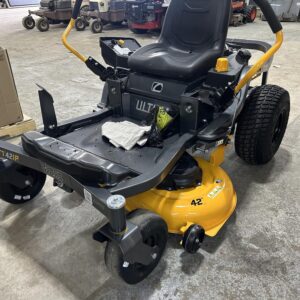
Cub Cadet ZT1-50 Zero-Turn
£5,874.00 (inc. VAT)Ask on WhatsApp
What separates zero-turn mowers from ride-on mowers?
A zero-turn is built around manoeuvrability and output. Twin-lever steering lets the machine turn within its own footprint, which matters when the site has islands, benches, paths, tree lines, and repeated trimming work. A conventional Ride-On Mower is usually easier for inexperienced operators, often better at collecting, and sometimes more comfortable on mixed private-estate work. The gain with a zero-turn is time. The price of that gain is that it asks more of the operator and more of the site.
- Zero-turn mowers are faster around obstacles and on repeated mowing routes
- Ride-on mowers are often simpler for occasional operators
- Zero-turns usually prioritise discharge, mulch, and productivity over collection
- Ride-ons often suit mixed amenity mowing better where presentation and versatility matter
- On steep or slippery ground, neither assumption nor confidence is a traction system: look at Slope & Hillside Mowers
Who zero-turn mowers are for
Zero-turn mowers suit contractors cutting multiple acres per day, estate teams maintaining broad ornamental lawns, councils looking after parks and open space, and sports or amenity crews mowing large areas where turns and edge work eat time. Think five acres and up, reasonably open layouts, repeated weekly cutting, and a team that values labour efficiency. They make sense on sites where a one hundred and twenty-two to one hundred and fifty-two cm deck can move freely, where side discharge or mulch is acceptable, and where operator familiarity is not an afterthought. Buyers exploring Kubota, John Deere, Toro, Ferris, or Cub Cadet usually come here when productivity is the argument.
Who it isn’t for
A zero-turn is the wrong fit if your site is steep, soft, deeply rutted, or full of awkward cambers that unsettle a flat-deck machine. It is also a poor choice if you need one machine to collect heavily through autumn, tow implements regularly, or hand the keys to casual operators who use it once a fortnight. For that kind of work, Ride-On Mowers or Lawn & Garden Tractors are often the steadier choice.
Five questions to ask before you buy
- How much of your mowing time is actually lost turning, trimming, and repositioning rather than cutting straight?
- Are your sites open enough to justify a wider deck, or will access points limit what you can use?
- Can your grass management plan live with side discharge or mulching, or do you truly need collection?
- Who will operate the machine, and are they comfortable with twin-lever steering and faster working speeds?
- Do you need a finish mower for maintained turf, or are you quietly asking it to do rough-cut work it was never built for?